



The Boundary Reset

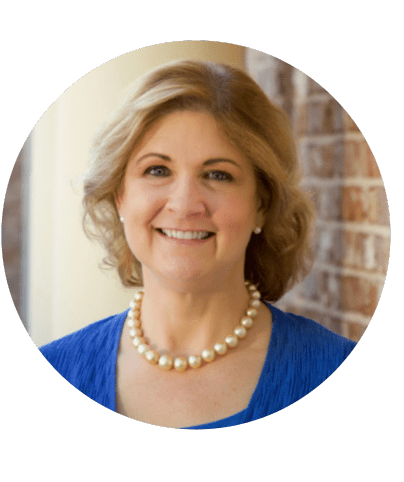
By Kendall Wolz
Mental Health and Wellness Manager at Mosaic Georgia
The Boundary Reset 
The start of a new year often renews our focus on wellbeing and goal setting. While some of us feel energized and excited to begin again, others of us may be recovering from the physical and emotional exhaustion of the holiday season. Whether you are stepping into the new year with joy and anticipation or dragging yourself forward wishing that time would slow down, this can be an opportune moment to revisit what we know about boundaries and reflect on which ones may need to be established or strengthened.
What are boundaries?
A boundary is a limit a person sets to define what behaviors, interactions, and treatment they find acceptable or unacceptable. Often, we become most aware of boundaries when they have been crossed. We notice the discomfort, invalidation, resentment, or even harm when a boundary is violated. When boundaries are respected, people often experience greater clarity, safety, connection, and compassion.
Importantly, boundaries are primarily for the individual or group setting them. They support self-regulation and self-protection and help clarify where one person ends and another begins.
Boundaries are not . . .
Punishments, ultimatums, or attempts to control other people.
For example, someone might say, “I’m ignoring you until you apologize the right way.” While this can sound like a boundary, it is more accurately described as a consequence intended to cause discomfort or teach a lesson. A boundary, in contrast, is about protecting one’s emotional or physical wellbeing regardless of how the other person responds.
Similarly, boundaries are sometimes mistaken for ultimatums. A statement such as “If you don’t change, I’m leaving,” is designed to force a specific outcome and emphasize compliance rather than choice. A boundary would instead clarify what the individual will do for themselves if the situation continues.
At their core, boundaries require an internal focus on the self and the question: What will I do to stay safe and well? Punishment and ultimatums shift the focus outward, placing responsibility on others to change in order to avoid consequences.
What are the types of boundaries?
There are many types of boundaries and the list can become extensive. Below are some of the most common categories.

Case Examples: Beginning to Set Boundaries
As a counselor, I find case examples especially helpful for illustrating concepts like boundaries. Recognizing the need for a boundary often starts internally, with noticing discomfort or tension.
See if any of the examples below resonate:
Emotional Boundary
Context: I feel emotionally drained by a friend who frequently vents without asking.
Internal Cues: I feel exhausted and resentful after these conversations.
How I may set a boundary: “I care about you, and I’m not able to talk about heavy topics right now. I can listen another time, or we can talk about something lighter today.”
This is an effective boundary because it states a personal limit, does not shame or demand change, and offers choice without obligation.
Physical Boundary
Context: I feel uncomfortable with hugs from extended family.
Internal Cues: My body tenses when people hug me without asking.
How I may set a boundary: “I’m not a hugger, but I’m happy to say hello another way – how about a fist bump.”
This boundary centers bodily autonomy, uses simple and neutral language, makes an alternative suggestion for a hello, and does not over-explain or apologize.
Relational Boundary
Context: I feel judged when family members comment on my life choices.
Internal Cues: I shut down when my decisions are criticized.
How I may set a boundary: “I’m not open to feedback about my personal decisions. If it comes up, I prefer to change the subject or leave the conversation.”
This boundary is specific, clearly names the topic that is off-limits, and explains how the person will respond if the boundary is crossed. It emphasizes self-protection rather than control.
Setting boundaries is an ongoing practice that often requires regular reflection and adjustment. It is normal for boundaries to feel uncomfortable or imperfect, especially at first. Practicing self-compassion is an essential part of the process. Like any skill, boundary-setting develops over time and with practice.
As you move into the new year, where are you noticing tension or discomfort? What boundaries might support your wellbeing in the months ahead?
Kendall Wolz heads up the Mental Health and Wellness team that provides individual, family, and group therapy to those seeking care at Mosaic Georgia. As a survivor herself, she has a unique insight into the challenges of living with past trauma, how it impacts lives daily, and what the process of healing truly looks like. Her personal website, Brave Girl, Speak unpacks some of the complex issues that come along with being a survivor of sexual violence. Visit Kendall’s site to read more about her personal journey healing from trauma and peeling the layers to reclaim her true self.


 Mayra Paradas is the passionate, bi-lingual dance teacher and personal trainer who has brought new and fun ways to heal to Mosaic Georgia’s Wholeness Collective! For Womens’ History Month, we are proud to feature Mayra and capture her thoughts on womanhood, making a living while prioritizing your dreams, and advice she’d give to women and survivors of trauma.
 “Showing gratitude is one of the simplest yet most powerful things humans can do for each other.”


 At Mosaic Georgia, we play a very sensitive role in the lives of the clients we support. From the first moment we meet them, the stakes are high. We are likely making introductions with a crime victim on the worst day of their lives. It’s a sacred responsibility that our team doesn’t take lightly.
 WELLNESS falls among the countless misused (and misunderstood) ‘buzz words’ in our culture slowly losing their meaning. In a climate of extremes where you’re either a ‘narcissist’ or a ‘spiritual guru’, it became essential for Mosaic Georgia to do wellness thoughtfully when its Wholeness Collective programming launched in 2022.