



Someone’s Gotta Say It
When Care Meets Courage
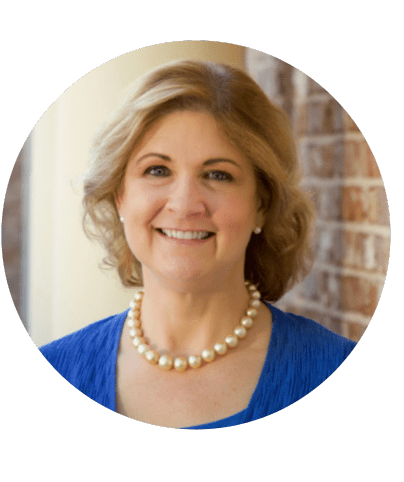
By Marina Sampanes Peed
Executive Director of Mosaic Georgia
 As the year ends, so does my chapter as Executive Director of Mosaic Georgia. It’s a strange mix of ordinary and profound — an ending that arrives quietly amidst the holiday season. The 24/7 work will continue in capable hands; I’ll support the important mission in new ways inspired by the observations and experiences in the CEO role.
I’ve noticed how much heavier life has become for so many kids and adults this year. People walk through our doors carrying strain that shows up in their shoulders and their breathing long before it reaches their words. And the people doing the caring carry their own loads – families to tend, bills to manage, health concerns, and the ongoing circus act we call modern life. Caring systems are comprised of people who don’t stand above the turbulence. They feel it directly. Yet they keep showing up, coffee in hand, humor intact (mostly), ready to steady someone else’s world for a moment.
But the turbulence has taken on a sharper edge this year.
Across our state and nation, we keep hearing accounts — not one incident, not one story, but a troubling pattern — of people being confronted in ordinary places in ways that raise serious questions about warrants, identification, and lawful authority. Fear and distrust grow quickly when public actions appear more performative than constitutional.
And fear is corrosive: it undermines trust in legitimate public safety efforts, pushes victims into silence, and distorts the very systems meant to protect us.
As a victim services organization, we cannot ignore this. Power and control are the very tools used to abuse and harm the children, adults, and seniors we serve every day. When those same tools show up in public systems, even unintentionally, people retreat instead of reaching out. Our work depends on the integrity of due process and equal protection under the law. When those principles blur, justice becomes unpredictable. And unpredictable justice is no justice at all.
If the aim is truly to address dangerous individuals, the methods must be lawful, precise, and transparent. And while we’re naming things plainly, it is hard to believe any claim to a “public safety” agenda that simultaneously reduces federal funding for crime victim services. We know better.
This season, many turn to the story of a young family seeking shelter where none was guaranteed. That story endures because the questions it raises are still with us: Who is welcomed? Who is protected? Who is treated as fully human?
The red words in that well-worn book — printed in another color so no one can miss them — still point toward a steady north star. Mercy, justice, dignity. They’re not seasonal ornaments; they’re operating instructions for community life.
Here at Mosaic, continuity is our strength. Leadership has always been shared work, not a solo act. That’s why this transition feels less like a farewell and more like a shift in formation. Lindsay will lead with steadiness and clarity. And the team will continue doing what they do best: creating safety, honoring truth, and walking with people through their hardest moments.
Even in a turbulent world, healing remains possible. I’ve witnessed too many quiet turning points to doubt it — a breath released, a truth spoken, a young person realizing their worth. These moments aren’t dramatic, but they are foundations. They hold.
As I step into the new year, my gratitude is deeper than anything I can fit into one column.
If I leave you with one request, it’s this:
Please care for the people who care for the community.
And speak up — clearly, consistently — when justice drifts off course. A healthy community depends on voices that refuse to look away.
Our Mosaic will continue to evolve. The pattern will shift.
And if we each tend to our small piece with integrity, the whole will remain strong enough to carry us into whatever comes next.


 When I was in graduate school, I regularly heard my peers talk about their dreams of owning a private counseling practice, working in a school system with students, or working on a behavioral health unit of a hospital. I do not recall anyone talking about opportunities to work as a therapist/counselor at a Child Advocacy Center.